
Ocean trash is one of the world’s most serious pollution issues. What dangers do trash pose to the ocean? How do volunteers pick up trash in the ocean? What can ordinary people do to help protect the ocean?
To tell their stories, Shenzhen Special Zone Daily recently interviewed several of the city’s active volunteer divers who have been doing cleanups for years.
“Marine garbage, particularly plastic garbage, not only degrades water quality but also poses a threat to marine organisms’ survival,” Liu Xuelian, co-executive director of Better Blue, a nonprofit volunteer diver environmental protection organization, told the Daily.
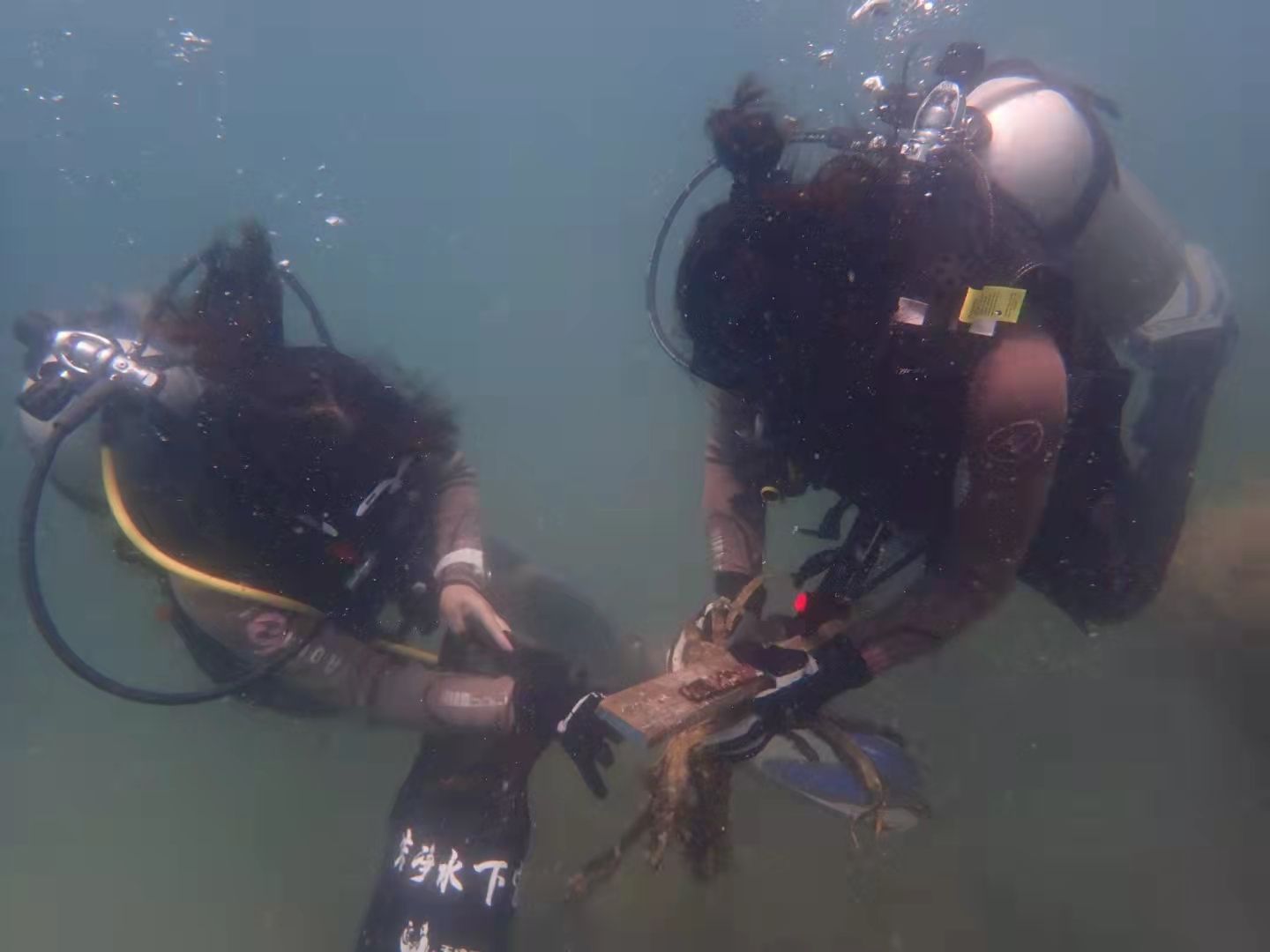
Volunteer divers pick up trash at sea. DT News
Better Blue has been mobilizing volunteer divers to participate in an ocean cleanup project at 27 dive spots across the country for more than four years since 2017. Every year, approximately 2,000 divers participate in the project, cleaning up trash weighing about 2,000 kilograms.
“At one point, we collected more than 100 kilograms of marine debris, and on average, we collect more than 15 kilograms of garbage every time. There is generally more underwater trash in Haibei Bay in the summer than in winter, according to our experience,” said a diving instructor nicknamed Luosi, whose real name was not provided.
Since 2018, Luosi has been cleaning up marine debris at the Haibei Bay diving spot in Nan’ao.
Luosi was inspired to organize diving students to participate in ocean cleanup activities after he first participated in a marine protection-themed activity in Dameisha in 2016. He and his diving buddies once picked up a mesh tarpaulin half the size of a basketball court in the sea.
Another diver named Liu said, “Shenzhen’s marine protection volunteers are very active.” Liu added that for several years in a row, volunteers have been cleaning up trash at three Shenzhen diving points — Yangmeikeng, Haibei Bay in Nan’ao and Penzai Bay.
Liu said that safety comes first when diving to pick up trash, and that water conditions such as temperature, tide, current, and surge should be taken into account.
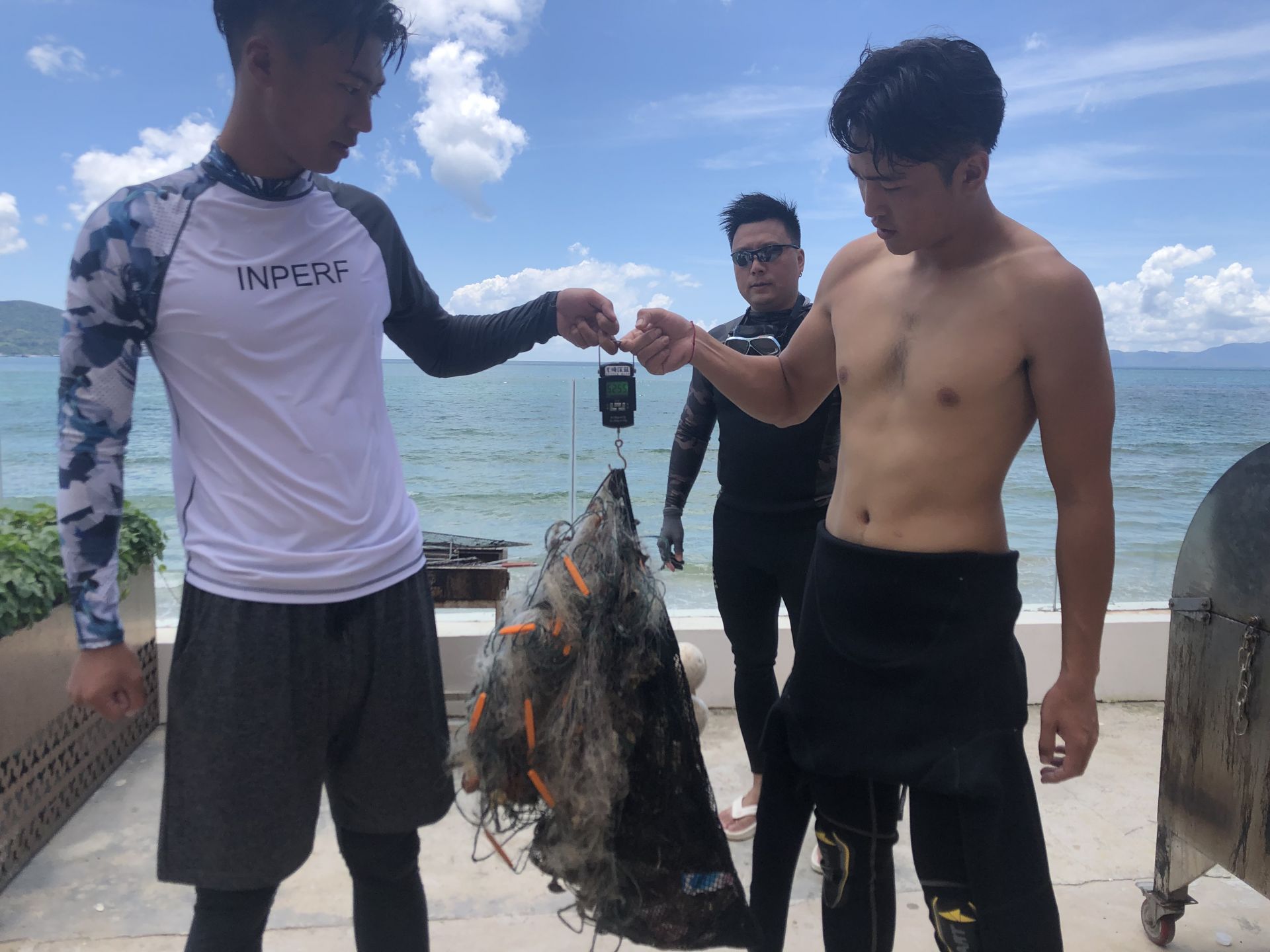
Volunteers weigh the garbage they collected from the sea.
Before diving, divers must receive garbage cleanup training, understand the different types of garbage, and determine whether the garbage needs to be removed. Garbage collection also necessitates teamwork and cooperation, as well as the use of tools such as cleaning nets, diving gloves and buoyancy devices.
After getting the garbage out of the water, the divers would sort, weigh and record it before transporting it to appropriate garbage treatment locations with the help of volunteers on the ground.
“We can get a dynamic value through continuous recording to know whether the garbage in that sea area increases or decreases, which can provide a reference for the government to make decisions,” explained a volunteer nicknamed Noodle who removes trash from Penzai Bay. He was identified in the report only by his nickname.
Noodle is the executive director of Better Blue’s marine protection activities in Shenzhen. He often visits schools and libraries to give popular science lectures on marine protection, in addition to volunteering in marine garbage cleanup.
According to him, ocean cleanup volunteers are not limited to divers. Ordinary citizens can also join and lend a hand, such as assisting divers in classifying garbage on shore, recording data and cleaning up trash on the beach on a regular basis.
Website Identification Code:
4403930001
 Record Number With Public Security Organs:
44031202000003
