
Dapeng New District has officially activated a major unmanned aerial vehicle (UAV) testing base, establishing the coastal peninsula as a critical engine in Shenzhen’s drive to become the world’s leading "low-altitude economy" city.
Launched on December 10, the base forms a core part of Shenzhen’s "1+5+4" infrastructure framework for low-altitude innovation. It is designed to provide a centralized platform for technical R&D, airworthiness verification, and the development of industry standards, aiming to export a regulatory "Shenzhen Solution" for the management of autonomous airspace.
The facility is strategically situated in the Baguang area of Dapeng, a location chosen for its complex environmental profile. While the physical site covers 11,000 square meters—featuring hangars, a command center, and exhibition spaces—its primary asset is the extensive and diverse airspace it controls.
Operators state that the base offers 20.2 square kilometers of low-altitude flight zones with a standard ceiling of 600 meters, which increases to over 3,000 meters in designated areas. Crucially, the base leverages Daeng’s coastal geography to offer an extended maritime testing range of approximately 200 square kilometers.
Li Xi, Deputy General Manager of the Shenzhen Urban Transport Planning Center Co., Ltd., emphasized that Dapeng’s topography is essential for rigorous testing. "We hope to build an open, co-creation platform," Li said. "Relying on Dapeng's all-element environment of mountains, seas, lakes, islands, and urban areas, we can systematically verify the compatibility of various aircraft … minimizing technical risks and market uncertainties."
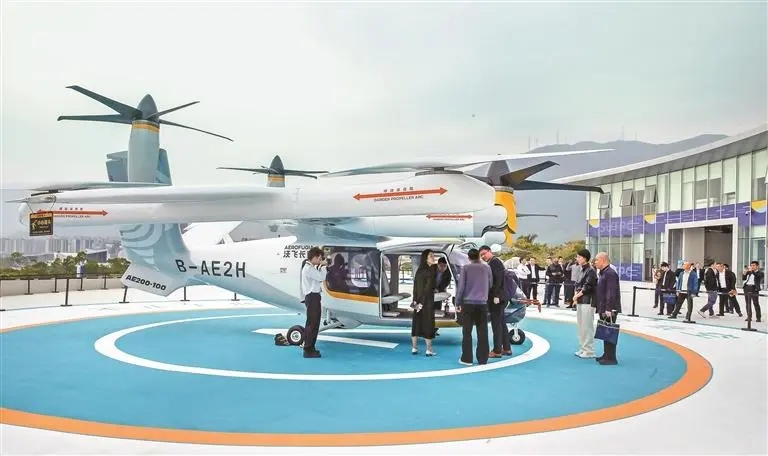
The base is equipped with advanced communication, sensing, and meteorological monitoring systems designed to support "full-scenario" testing. Specific focus areas include high-stress operations such as high-rise firefighting, forest fire suppression, and maritime logistics.
Beyond testing, the facility is mandated to drive commercial applications. It aims to act as a catalyst for the electric vertical takeoff and landing (eVTOL) sector, facilitating cross-border flight tests and the development of pilot projects in island logistics and emergency rescue.
The launch has secured immediate industry backing. Twelve companies, including Aerofugia and Zerog Aircraft Industry, have signed on as the first batch of partners to conduct tests at the site. Simultaneously, a partnership with the Southern University of Science and Technology’s Advanced Institute for Ocean Research was unveiled to establish a demonstration base for near-shore low-altitude technology. While the site focuses on industrial applications, it will also serve public function. Future plans include opening the base to tourists for "mountain and sea" low-altitude flight experiences and educational events, accessible via a digital booking platform.
Website Identification Code:
4403930001
 Record Number With Public Security Organs:
44031202000003
